Every tracked open event, including repeat activity.
Recipients counted once for a clearer reach estimate.
Measure against a defined objective
A useful dashboard begins with the campaign's job: inform customers, generate qualified visits, recover onboarding, or drive a purchase. The same metric can be meaningful for one objective and distracting for another.
Write the objective and desired recipient action before selecting measures. This prevents teams from treating every available number as equally important.
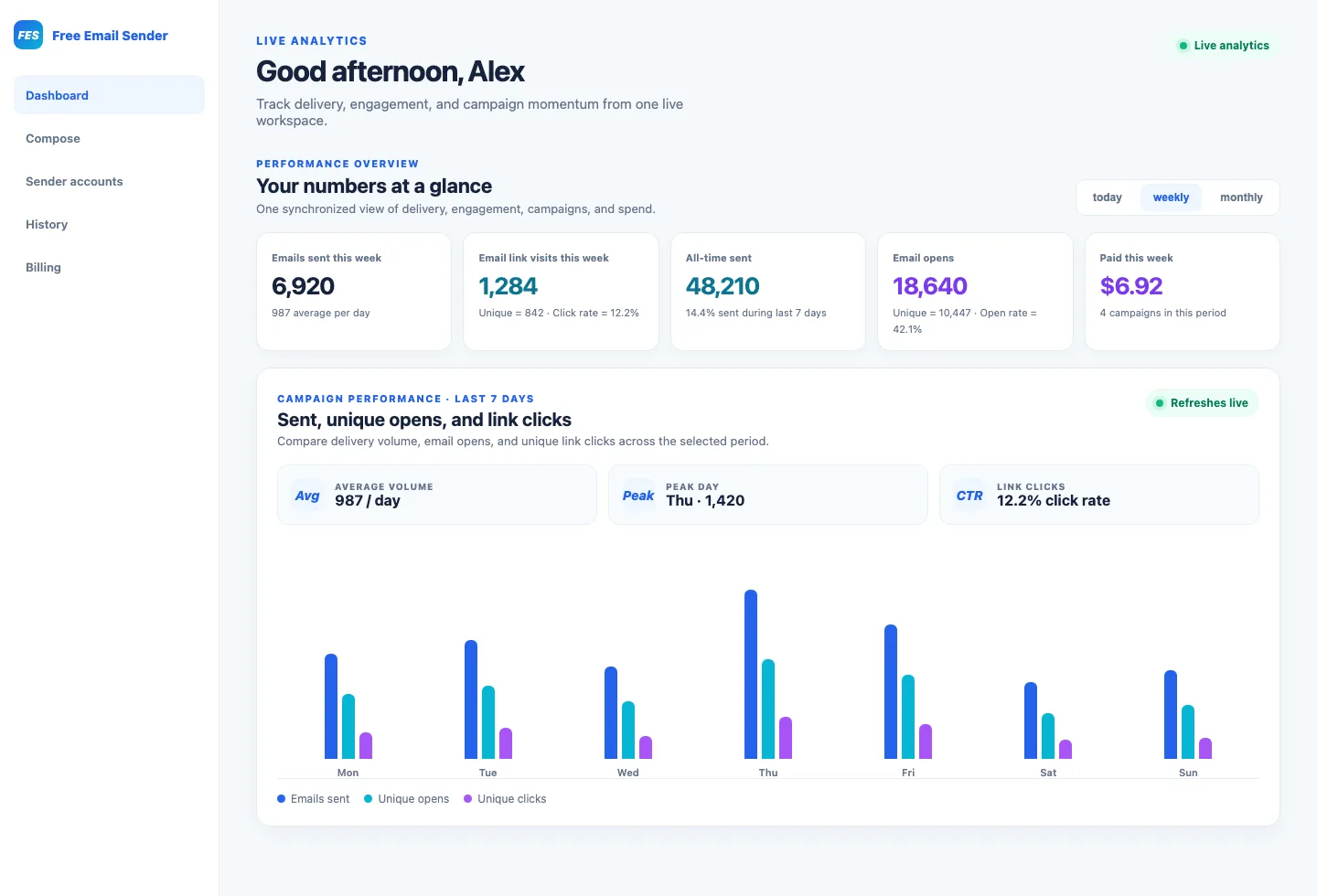
Understand delivery and failure signals
Accepted messages, temporary deferrals, permanent failures, and complaints describe list and sending health. They do not prove that a person saw the email or that an accepted message reached the primary inbox.
Review failure reasons by domain and source rather than repeatedly retrying every address. Remove permanent failures and investigate sudden changes before the next large send.
- Accepted rate
- Permanent failure rate
- Temporary deferral rate
- Complaint rate
- Unsubscribe rate
Treat opens as directional
Open tracking can be affected by image blocking, automated privacy features, and security scanners. It remains useful for broad patterns in a consistent setup, but it should not be treated as a precise count of readers.
Avoid making high-impact decisions from opens alone. Combine them with clicks, replies, site behavior, and conversions that are closer to the intended outcome.
Use click measures with context
Click-through rate relates clicks to delivered messages, while click-to-open rate relates clicks to tracked opens. Document which denominator your reports use so comparisons remain valid.
Automated scanners can visit links before a recipient does. Look for downstream sessions and meaningful actions, and filter known bot patterns where your analytics system supports it.
Connect campaigns to conversions
Define a conversion as a concrete action such as registration, purchase, booked consultation, or completed setup. Consistent campaign parameters and analytics events help connect email activity to that action.
Attribution is an estimate because people use multiple devices and channels. Report the attribution window and model alongside the result rather than presenting one number as complete truth.
Monitor list quality over time
Net list growth balances new subscribers against unsubscribes and invalid addresses. Engagement by signup source can reveal whether a form attracts genuinely interested people.
Cohort views are often more useful than a single list-wide average. Compare contacts acquired in similar periods and contexts to avoid hiding declining quality behind total growth.
- Net subscriber change
- Active audience by cohort
- Opt-out trend
- Failure trend by source
- Re-engagement outcome
Build a repeatable review cadence
Use a small scorecard tied to the objective, annotate major campaign changes, and compare like with like. Segment results only where the sample is large enough to support a responsible conclusion.
Turn findings into one test or operational change at a time. Measurement creates value when it improves audience fit, content, timing, or data quality—not when it merely expands the dashboard.